
RCS vs. SMS: A Practical Comparison for Mobile Messaging Programs

Somewhere above you, someone just asked for a plan to get more out of your text messaging program. Not a bigger list. Not more sends. More engagement.
If your program is already getting solid SMS customer engagement, that directive puts you in a tricky spot: the channel's working, but there's opportunity for growth, and you need to find it.
Here's where that growth opportunity likely is. Right now, the messages you send your customer are sitting next to a dozen other unknown-sender texts, so they hesitate before tapping your link (or they shun it entirely). And once a message goes out, you have almost no way to see what happened after: Did the customer read it, act on it, or give up and call your contact center instead?
Rich Communication Services (RCS) messaging gives you the branding, verified sender identity, and interactive elements that push engagement past what plain text can carry.
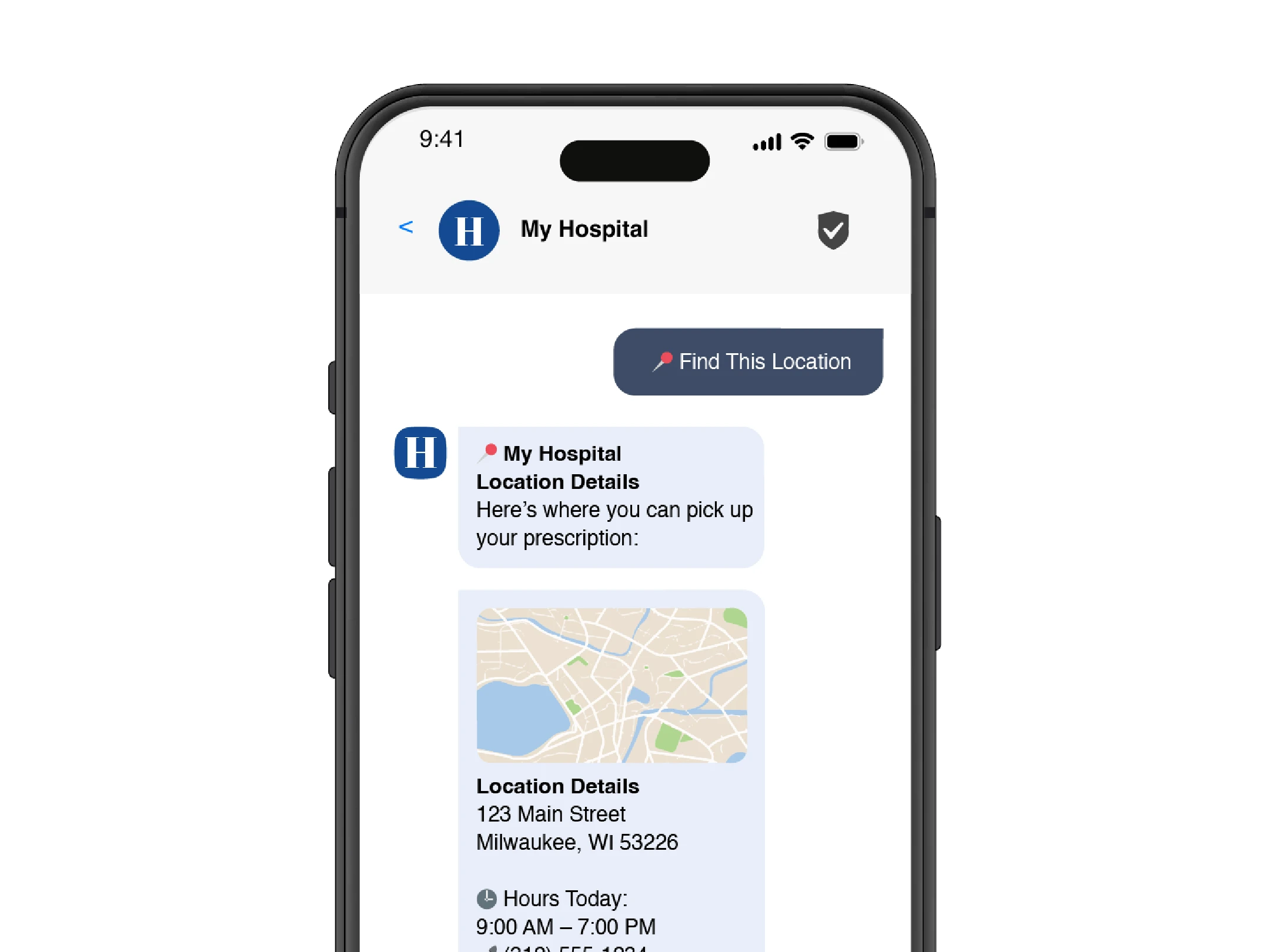
Instead of a generic number and a wall of text, customers see your logo and business name (visible before they even open the message).
Instead of a link that drops them into their mobile browser, customers get in-thread buttons that take them straight to the next step.
And instead of a delivery receipt, you get visibility into whether the message was read and acted on.
None of this means your SMS program is failing. But it does mean there's a messaging channel that can help your business push its customer engagement outcomes even further.
Where SMS Works and Where Its Limitations Lie
SMS earns its place in your messaging program because it's simple, universally supported, and dependable for basic alerts and reminders. Most of your customers already default to text over a phone call or an email, which is exactly why SMS customer engagement strategies tend to start there and stay there for years. RCS builds on that same reach, adding branding, verification, and interactivity, without asking customers to download anything new.
Signs your program is ready for something beyond plain text:
Your messages ask people to act, but nothing signals who's asking. Without recognizable branding, your customer has to build confidence in the sender before they even read the message.
Your links create drop-off instead of completion. A link forces your customer to leave the thread, load a page, and figure out what to do next. This can introduce friction at the moment you need them to keep moving.
You can't answer the questions leadership is asking. Delivery receipts don't tell you whether customers engaged, hesitated, or completed the task—which are helpful to show when it's time to justify the messaging program’s investment.
RELATED ARTICLE: Toll Road Text Scams Are a Trust Problem. RCS Helps Fix It.
SMS vs. RCS: What Changes?
Here's where the two channels diverge on factors that affect your results.
Area | SMS | RCS |
Brand identity | Plain sender number and text-only copy | Logo, brand name, and colors visible before the message is opened |
Trust and legitimacy | Feels anonymous; easy to spoof | Carrier-verified sender with a visible checkmark |
Engagement design | Linear, text-only | Structured cards, carousels, and suggested replies |
Action paths | A link the customer must tap and load | In-thread buttons for one-tap actions like "Pay Now" or "Confirm" |
Measurement | Delivery confirmation only | Delivery, read status, and interaction-level analytics |
Use-case fit | Strong for basic, universal notifications | Stronger where trust, interaction, and measurable action matter |
Enterprises are already acting on that difference: Juniper Research projects RCS will grow from just 3% of telecom operators' business messaging revenue in 2024 to 18% by 2029, a shift the firm attributes largely to "depleted trust in the SMS channel" pushing businesses toward RCS's verified sender status.
Branded Text Messages: Where RCS Earns Attention
Branding is a recognition problem before it's a design problem. When your customers see your logo and business name attached to a promotional offer, they can identify the sender instantly instead of guessing whether a random number is legitimate. That matters most for the categories where skepticism runs highest: billing, account access, and service messages.
Branding alone won't rescue a poorly designed message or a confusing offer. But it removes a specific kind of friction, the uncertainty of "who is this from," at the exact moment your customer decides whether to engage at all. That recognition can even shape which provider a customer picks in the first place: in a Datos Insights survey of 1,500 U.S. consumers, 59% said they'd choose a financial provider that offers RCS over one that doesn't.
Verified Text Messages: Trust Isn't a Design Detail
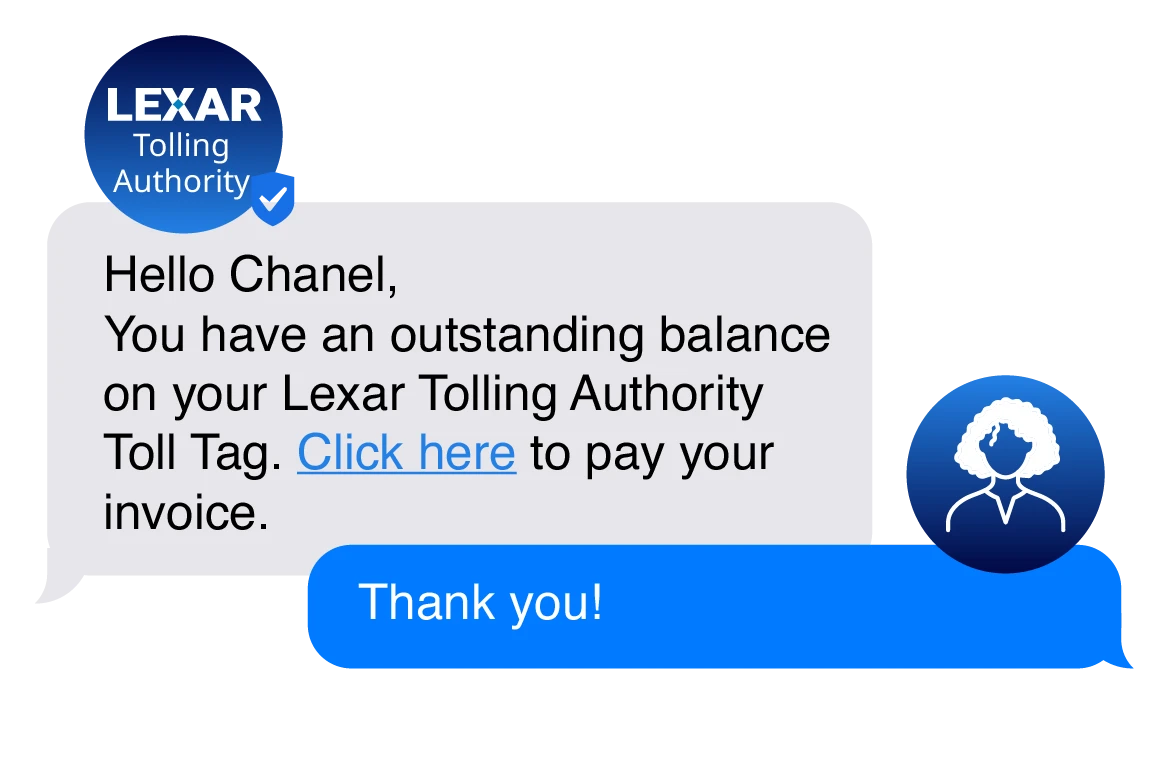
Your customers have learned to be cautious. When a message involves a payment, an account change, or a security notice, the decision to click or ignore often comes down to one question: is this really from the company I do business with? RCS answers that question directly through carrier-level sender verification, registered against the GSMA Universal Profile standard, so your customers see a confirmed checkmark rather than an unfamiliar number.
That verification isn't cosmetic. The same Datos Insights research found that 88% of consumers say they'd trust a message more if it displayed a verified company badge, and 68% feel more comfortable communicating with a financial provider over RCS than other messaging formats. For fraud alerts, for example, that trust gap can be the difference between a fast resolution and a call center ticket.
Interactive Text Messaging: Notifying vs. Getting Something Done
Many of your communication programs need messages to do more than inform. Confirming an appointment, rescheduling a delivery, paying a bill, or starting an enrollment flow all require your customer to make a decision and act on it. Plain SMS can include a link, but from there it offers little structure to guide that decision.
Interactive text messaging turns that dead end into a guided path. A billing message can include a "Pay Now" button. An appointment reminder can include "Confirm" and "Reschedule" options. A retail promotion can include a product carousel with a one-tap purchase path. That structure pays off in willingness to engage, too: 84% of consumers in the Datos Insights study said they'd accept RCS for account alerts and notifications, a preference the report ties directly to reduced call-center load since updates can be resolved in-thread.
Common RCS Misconceptions, and the Reality Behind Each
Before you evaluate RCS for your program, it helps to clear away a few assumptions that don't hold up under a closer look.
"RCS is just prettier SMS." RCS carries verified sender identity, structured interactive elements like suggested replies and one-tap actions, and read-level analytics, none of which SMS supports at the protocol level. Better presentation is part of those functions.
"RCS only works on Android." That was true for years, but Apple added RCS support to iOS in 2024, putting the two major mobile operating systems on the same page for the first time. Juniper Research reports RCS adoption has already surpassed 80% in markets like the U.S. and France as a result. Devices or carriers that still don't support RCS fall back to SMS or MMS automatically, so you're not choosing one channel at the expense of reach.
"RCS doesn't integrate with business apps." RCS messages can deep link directly into your app, trigger from real account and transaction events, and sit inside the same orchestration layer as your SMS, email, and voice channels. It's designed to connect into your existing workflows; it doesn't have to operate as an island.
"RCS is always too expensive to justify over SMS." Cost only needs justifying when the use case doesn't call for what RCS adds. You don't have to move your entire messaging volume to RCS. Reserving it for the messages where trust, interaction, or completion visibility matter most, and keeping SMS for simple, high-volume notifications, keeps the investment proportional to the outcome.
Better Mobile Messaging Engagement, or Just Better-Looking Messages?
It's true that richer presentation without a real use case behind it doesn't automatically produce better mobile messaging engagement.
The more useful question to ask yourself isn't whether RCS is more appealing. Instead, ask what has to improve for this channel change to matter to your business: recognition, click-through, completion, or confidence? If your use case is a basic reminder where speed and reach are all you need, SMS may already be doing the job. If your use case involves trust, a decision, or a measurable action, the case for RCS gets much stronger.
So, Is RCS Messaging Better Than SMS?
The honest answer depends on what you're sending.
Yes, when your communication needs branding, verification, interactivity, and better visibility into what happened after the send.
Not automatically, when your use case is simple and speed or universal reach matters more than richness.
RCS tends to be the stronger choice when your message:
Represents a brand your customers already know
Asks the customer to trust the sender before acting
Requires a next-step action, not just a notification
Benefits from click and completion visibility
Connects into an app or a broader digital workflow
SMS is often still sufficient when your message:
Is purely informational
Requires minimal context to understand
Doesn't depend on brand presentation to be effective
Doesn't need deeper interaction to succeed
One thing to clarify: RCS isn't meant to replace SMS in your channel mix. The two should coexist in it, each channel playing to its respective strengths.
RELATED ARTICLE: Will iOS 26 Make Customers Miss Your Messages? How to Stay Visible
Where to Start With an RCS Program
The most useful next step isn't a wholesale channel switch. It's a focused test against your current SMS performance. Before you roll anything out, walk through a short checklist:
Which of your messages suffer most from low trust or weak recognition today?
Which journeys (billing, scheduling, onboarding, etc.) would benefit from guided interaction instead of a link?
What metrics are missing from your current SMS reporting that you'd need to prove this works?
Where would verified identity plausibly change your customers' behavior, not just the message's appearance?
What would count as meaningful improvement over SMS for you: fewer inbound calls, higher completion, faster resolution?
Start with one or two use cases where SMS limitations are already visible, bring in your marketing, operations, digital, and compliance stakeholders early, and keep SMS in the mix as a fallback rather than treating this as an either-or decision.
Related Resources

Stop Guessing Your Customer Communications Strategy

Why Insurance Communications Are Creating Policyholder Frustration (and Churn)

Why RCS Messaging Is the Future of Business Communication