
eSIM Pros and Cons
Switching to embedded subscriber identity modules (eSIMs) can transform how you manage large networks of devices. As the industry moves away from physical SIM cards, understanding the pros and cons of eSIMs is crucial. This guide covers the opportunities and risks associated with eSIMs so you can make confident, informed decisions for efficiency and security in your operations.
What is an eSIM?
An eSIM is a reprogrammable digital SIM card soldered directly onto a device's motherboard, eliminating the need for a removable plastic SIM. Unlike traditional SIM cards, which require manual swapping for new carriers or devices, eSIMs support remote provisioning, allowing you to download, activate and switch between network profiles over the air. This capability simplifies device onboarding, enhances flexibility and unlocks new service options.
eSIMs can store several mobile user profiles simultaneously. This is particularly beneficial for enterprises that manage many devices. With the rise of 5G and IoT, eSIMs will play a central role in how telecom operators and enterprises manage their mobile ecosystems.
Differences between eSIMs and eUICCs
While often used interchangeably, eSIMs and eUICCs are distinct concepts in the telecom ecosystem.
An eSIM is the entire embedded SIM solution, which includes the digital SIM card integrated into the device and the ecosystem supporting it. eSIMs enable digital connectivity without a physical card.
In comparison, an embedded universal integrated circuit card (eUICC) is the software running on the eSIM hardware. You can think of the eUICC as the engine behind the eSIM. It enables remote provisioning and carrier profile management.
This distinction matters when choosing devices and platforms, as not all eSIMs have eUICC functionality. For telecom purchasers, prioritizing eSIM devices with compliant eUICC support opens up the full range of eSIM benefits.
eSIMs vs. physical SIMs
Physical SIM cards have been essential to mobile connectivity for decades. They're available in standard, micro and nano sizes and perform the same basic function as eSIMS—storing subscriber information and authenticating devices on carrier networks. These two SIM types also differ in a few ways:
Purchase and activation: You can purchase an eSIM plan online and activate it instantly through an app, a QR code or device menu. A physical SIM card must be purchased and inserted into the device before use.
Carrier flexibility: A physical SIM often ties you to one operator until you swap cards. An eSIM lets you switch carriers remotely by downloading a new profile.
Device transfer: With a physical SIM, transferring service to a new device is as simple as removing the SIM card and inserting it into another phone or tablet. Transferring an eSIM, however, depends on the carrier's provisioning system. Some providers offer app-based tools to simplify the process, while others require support calls or manual reactivation, which can slow down deployment or troubleshooting.
SIM profile management and capacity: Physical SIM cards are single-profile by nature. Unless the device has dual SIM slots, you can only use one number and carrier at a time. eSIMs support multiple profiles stored on the same chip, with one active at a time. Users can toggle between business and personal lines or switch to local carriers while traveling.
Signal strength: There's no technical difference in signal strength between eSIMs and physical SIMs. Both rely on device antennas and carrier infrastructure. Variations in reception may be due to factors such as tower proximity, network congestion and device design, not the SIM format itself.
eSIM benefits for telecom buyers
For telecom purchasers, adopting eSIM technology offers significant benefits:
Robust security: eSIMs embed security keys within a tamper-resistant chip, making unauthorized cloning or physical tampering far more difficult than with removable cards. Organizations can manage and update profiles remotely, limiting unauthorized access.
Improved flexibility and convenience: An eSIM's ability to manage multiple profiles on a single device streamlines operations. Users can easily switch carriers and separate business and personal use.
Potential cost savings: With eSIMs, there's no need to order, ship or stock physical SIM cards, leading to direct savings on logistics and materials. Additionally, remote provisioning frees up IT and operational resources.
Space-saving design: eSIMs occupy less physical space within devices by eliminating the SIM tray, allowing for larger batteries, slimmer form factors or additional components that enhance functionality.
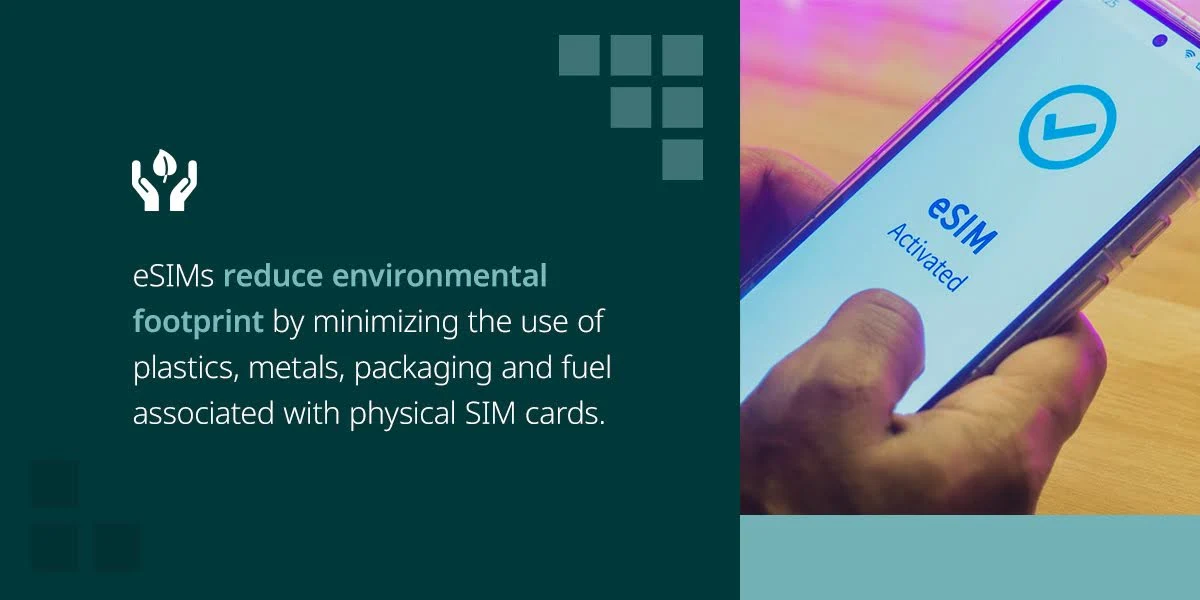
Environmental sustainability: eSIMs reduce environmental footprint by minimizing the use of plastics, metals, packaging and fuel associated with physical SIM cards.
Lower risk of damage or loss: Compared to traditional SIMs, embedded SIMs are less likely to experience physical damage, dust or moisture.
Streamlined device rollout: An eSIM's remote provisioning lets organizations deploy or update thousands of devices simultaneously, speeding up the time to market for new hardware or subscriber plans.
Improved experience for international travelers: eSIMs make it easy to switch to local carriers while abroad. This access increases consumer satisfaction and opens up new ways for businesses to sell data plans.
Disadvantages of eSIMs
While eSIMs offer manufacturers advantages, they also pose various challenges, particularly for organizations managing various devices or operating across multiple regions:
Limited device compatibility: Not all smartphones, tablets or IoT devices support eSIMs. Many legacy devices, as well as certain entry-level models, still require physical SIM cards.
Potential security concerns: Although eSIMs are more secure than physical SIMs in many respects, they're still prone to security threats such as SIM swap scams, spoofed QR codes and phishing attacks.
Complex profile transfers: Moving an eSIM profile from one device to another can be more complex than swapping a physical SIM. The process often depends on carrier policies. It can require IT support or direct involvement from your provider, leading to potential delays in reactivating service.
Increased privacy concerns: Because eSIMs aren't physically removable, users can't easily disconnect from the network. While this strengthens device security, it also introduces concerns around persistent tracking, especially in regions with less strict data protection laws.
Limited carrier and plan options: Although growing rapidly, eSIM support isn't universal among carriers or mobile virtual network operators. This lack of support may restrict your choice of plans, regions or device types—especially in emerging markets.
Simplify your telecom operations with CSG
Adopting eSIM technology can unlock new opportunities for telecom purchasers, but your success depends on your ability to manage entitlements efficiently and securely. CSG's Entitlements-as-a-Service (EaaS) addresses these priorities.
Built on industry-leading expertise and powered by NetLync , CSG EaaS delivers secure eSIM deployment across iOS and Android ecosystems. This platform offers centralized, cloud-based entitlement management, eliminating the need for multiple solutions and reducing onboarding complexity. With one-click eSIM transfers and automatic access to new features on release, your team can stay ahead of consumer demands and industry trends.
Whether you manage a growing device network or serve a dynamic international market, CSG EaaS enables seamless scaling and instant access to advanced features such as VoLTE and Wi-FI calling.