
Want Customers to Trust Your AI? Ease Your Team's AI Fatigue, First.

When you’re responsible for a brand’s customer experience (CX), you’re conditioned to think about everyone else.
How much communication is too much communication?
How personalized should content really be?
And how clear is it what the customer should do next?
The role can be rewarding, but it’s also exhausting. And that’s before you add the pressure to “figure out AI.” EY found that 54% of leaders say their employees are overwhelmed by constant AI developments. If you and your team are feeling AI fatigue—even as you’re implementing everything from chatbots to personalized communications—you’re not alone.
The problem is, when teams are stretched thin and aren't sure where to focus in leveraging AI, the organization can’t deliver unique and consistent customer experiences using the technology.
So, how do you move AI initiatives forward and protect your team in the process? Below, I'll outline five ways leaders can reduce internal noise and keep their teams focused on delivering customer-facing AI experiences people trust.
Related Post: Agentic AI in CX: How We Got Here and What You Need to Know About It
5 Steps to Using AI For CX—Without Feeling the Fatigue
1. Get Clear on Your Goals
AI fatigue doesn’t just come from having too many tools to learn too fast, but also uncertainty around their purpose. When priorities shift weekly or teams get conflicting marching orders, it can feel like you’re taking seven steps forward, four steps back.
According to a Wiley Workplace Intelligence survey, 68% of employees say they feel excited or curious about AI. But nearly half (48%) say they need clearer expectations from their organization on how to use AI effectively. A lack of internal alignment around AI use can quickly translate into confusion and inconsistency in how customer-facing AI solutions are delivered.
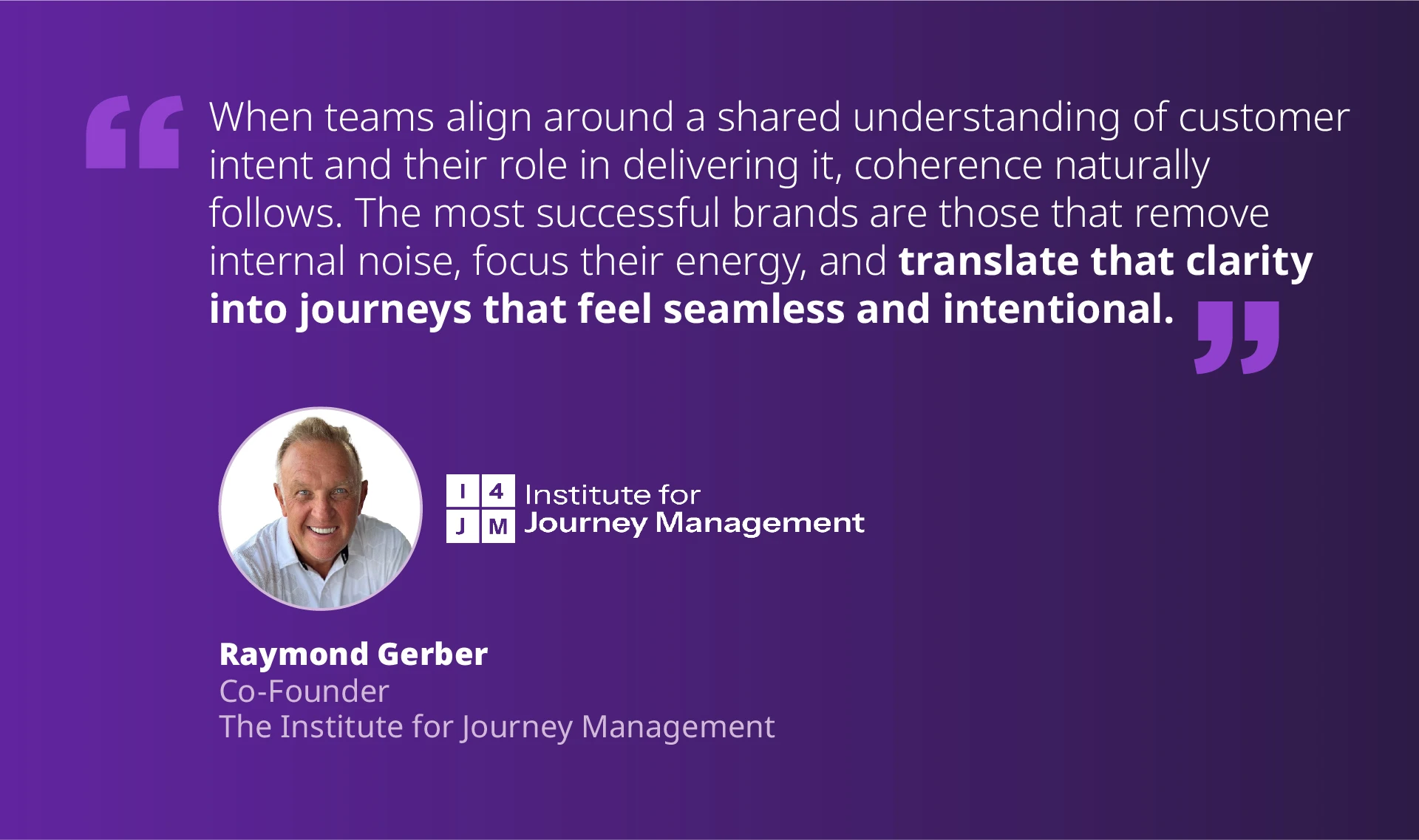
To counter that, recenter on the customer and the specific problems you’re trying to solve. As Raymond Gerber, Co-Founder of The Institute for Journey Management , puts it:
Actionable Step
Clarify why each AI use case exists before touching the “how.” If your team can’t articulate what CX problem the AI solves (or how it improves the customer journey), pause and reassess. Every AI use case should tie back to a CX-related business goal .
2. Work on Data Hygiene
If your data is out of date, incorrect or siloed, AI won’t smooth it over—it’ll just magnify every flaw. Yet that’s what most organizations are dealing with:
81% of professionals know their organizations have more to do to address quality issues.
52% of respondents cited data quality and availability as their biggest obstacle to AI adoption.
Actionable Steps
Unify customer context. Integrate data across systems so agents have customer history and preferences, and if a human has to step in, they don’t have to ask customers to repeat themselves—it’s all logged in one place.
Tighten system-to-system SLOs. Align how systems update statuses, balances, eligibility and next steps. Even tiny mismatches can create big problems once AI starts scaling decisions and responses.
Clean up your content. Standardize templates across channels and remove outdated content. The cleaner your library, the easier it is for AI to learn from it.
3. Start With Concrete Internal AI Use Cases
Nearly all (96%) C-suite leaders think AI will boost productivity , but 77% of employees using AI say it’s increased their workload. Bad data is part of the issue, but so is trying to automate too much, too fast.
The trick to getting value from AI is to identify the individual parts of your day-to-day that could benefit from automation, not to automate everything all at once.
Actionable Steps
The easiest way to reduce AI fatigue is to start with internal tasks that AI can reliably improve. Look for AI customer experience tools that can help you:
Pull core themes in customer surveys or feedback. AI can highlight recurring issues, new campaign buzzwords or even new product or service lines.
Cross-check older knowledge base articles with release notes. AI can flag where guidance is now obsolete or incomplete.
Turn a positioning doc from your product marketing team into draft emails or SMS messages.
Flag sentiment to surface early signals of churn, like asking to see a contract before renewal, pricing concerns, dancing around cancellation and recurring support cases.
Create quick trend reports to get a pulse on emerging issues.
4. Gradually Roll AI Out to Customers
The risk of deploying AI-powered platforms without careful thought and testing is that you alienate customers from the get-go. Instead, find AI-first customer experience tools that build their confidence —and free up your team to do their best work.
Actionable Steps
Our research shows that the top factors that increase confidence in automated customer support are:
1. Smooth transfer to a human agent. Let AI walk customers through simple, low-emotion steps, but make it obvious when to escalate to a real rep.
2. Issue resolution on the first attempt. Spend time training and testing AI features to provide the latest and greatest product documentation and a clear escalation path when it doesn’t know the answer.
3. Clear language. Proactive updates (shipping delays, outages, approvals) are one of the easiest ways to meet this expectation. When a message is simple and timely, customers see AI as helpful, not intrusive.
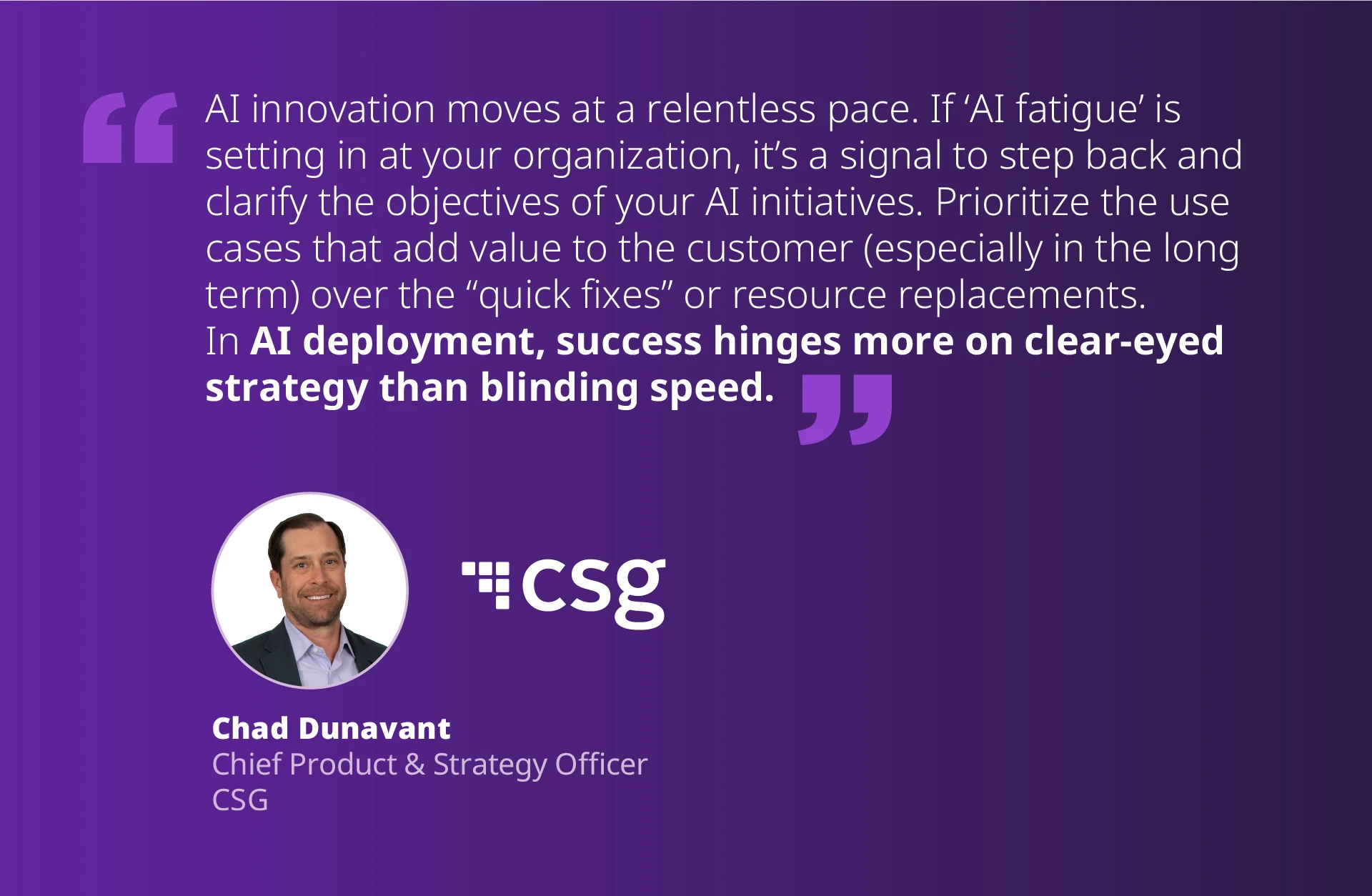
5. Measure the Right Signals
Early AI wins can look great on paper. But higher containment, fewer tickets and faster replies don’t necessarily equate to a better customer experience. That’s why you also need to track metrics that show AI actually improved customer interactions.
Actionable Steps
First attempt resolution rate
Deflection accuracy
Human handoff success rate
Then, leverage the insights from those KPI dashboards to inform the next steps and refine the AI implementation.
Share your wins to keep teams aligned and motivated. In team meetings, highlight before-and-after snapshots of interactions with and without AI, and the impact it had on both your customers and team efficiency.
Borrow what’s working elsewhere. If you’re stuck, ping someone on another team. Your fellow product, ops and field peers are using AI, too, and have their own ways of measuring success. While they may not directly translate to your org, you might be able to steal an idea or two.
Related Post: Rooted in Reality: CSG’s Approach to AI
Clarity First. Better Customer Experiences Next.
You can’t build trust in AI on top of burnout. The focus and consistency you want customers to feel have to exist inside your team first.
CSG helps companies create that foundation. Our solutions give teams the structure and support they need to apply AI in ways that both streamline their operations and make every interaction feel grounded and human.

Related Resources

5 Business Problems Telcos Face with the Wrong CPQ (and How to Solve Them)

Appledore Research Confirms: CSPs Need Telco-Specific CPQ Systems

How to Choose the Best CPQ Tools for Telco